


Press conference to mark the start of the 2026–2027 academic year
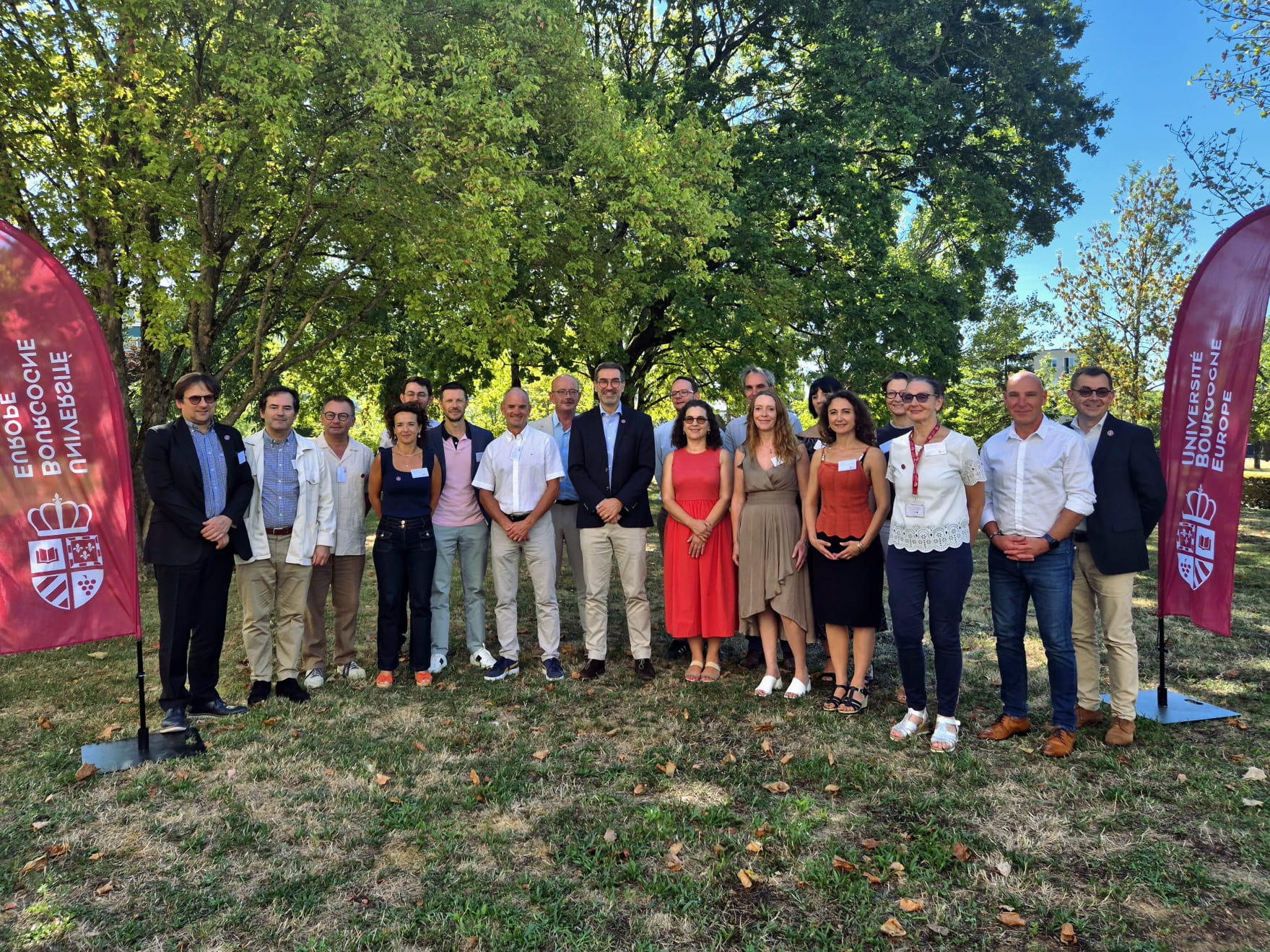
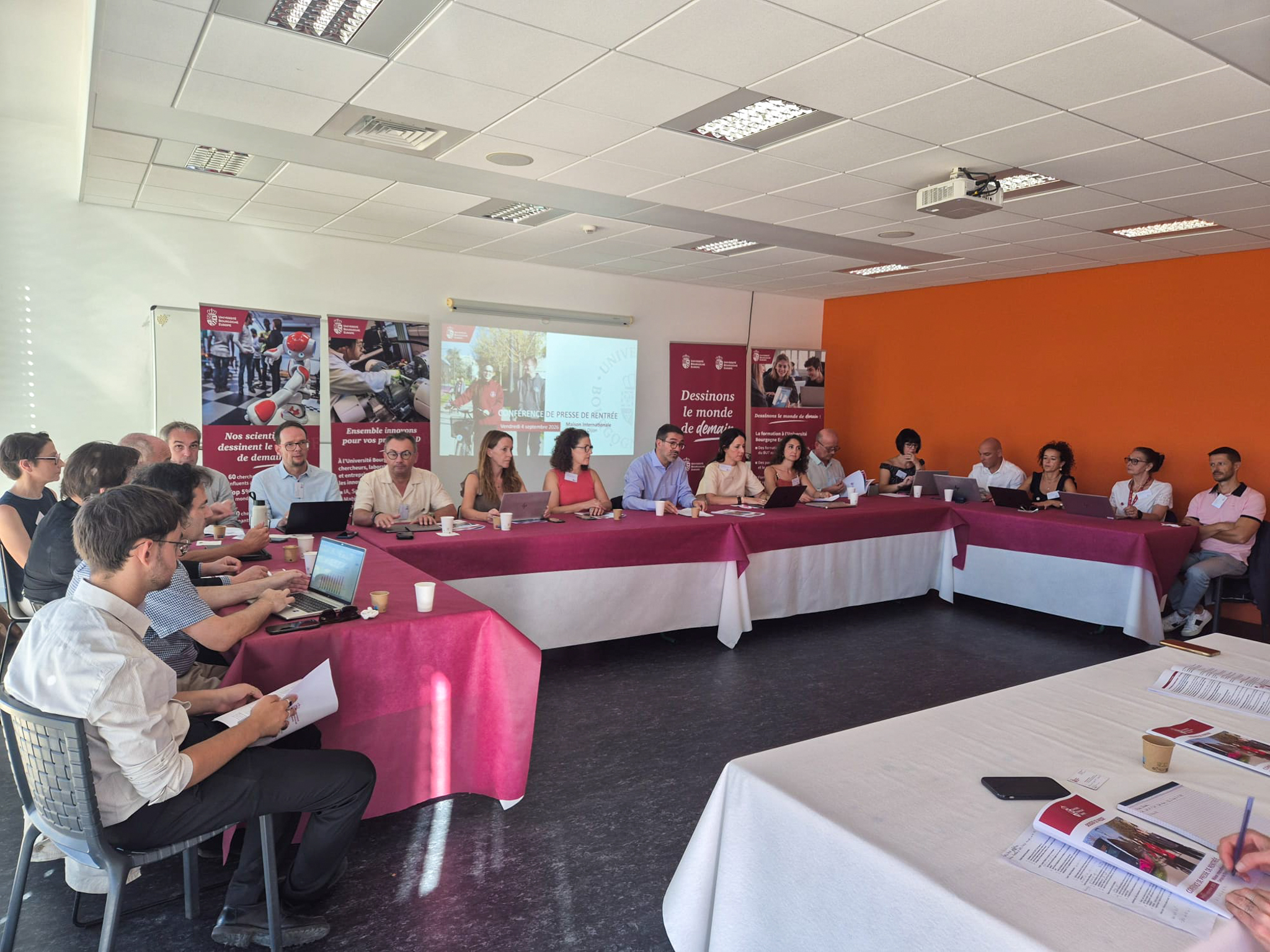
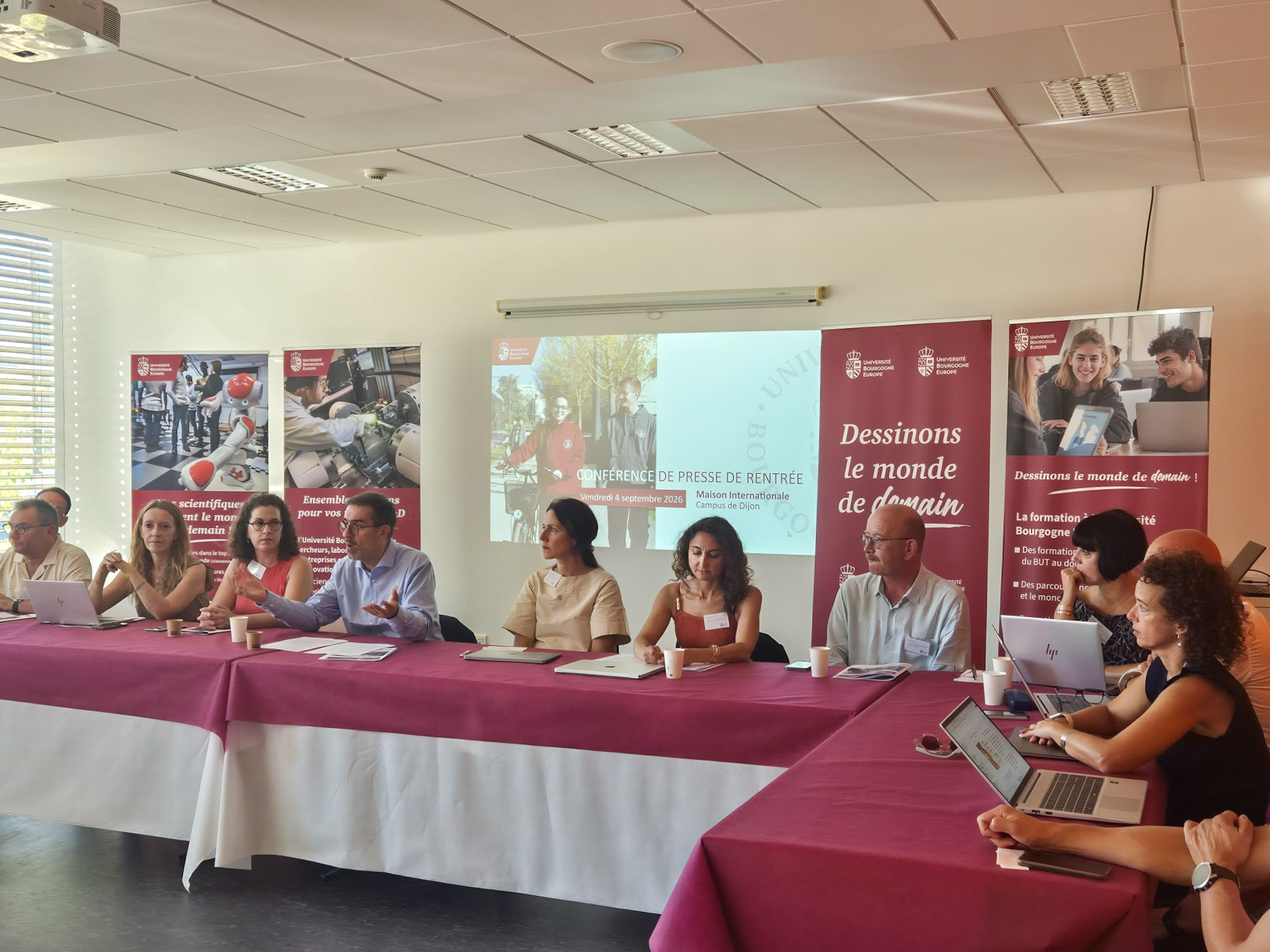
On 4 September 2026, the governing body of Université Bourgogne Europe attended the traditional press conference to mark the start of the academic year. This provided an opportunity to outline the highlights of the coming academic year for the UBE community.
September 2026 marks the university’s second academic year since its transition to Université Bourgogne Europe. The three-hundred-year-old institution remains true to its objectives: to be the driving force behind the transformations of tomorrow.
UBE continues to grow
In line with this, several events continue to shape the daily life of the university community, notably the integration of CREPS BFC into Université Bourgogne Europe as a partner member in August 2026. It thus joins a network of constituent institutions, associates and partners, comprising higher education and research organisations from the Bourgogne-Franche-Comté region.
These ambitions for the future are also reflected in the award of new ERASMUS+ funding for the FORTHEM Alliance for 2026–2028. The European FORTHEM Alliance has thus reached a new milestone with the award of nearly €7.2 million in Erasmus+ funding for its FORTHEM project.
Start of the 2026 academic year: New degree programmes at UBE
Let’s shape the future together!
With over 400 degree programmes and 31 research facilities (28 laboratories and 3 research support units), Université Bourgogne Europe is working to tackle the challenges facing society. The constituent and associated institutions of Université Bourgogne Europe are working together to offer new degree programmes tailored to the needs of local areas and the economic climate.
- Health – Launch of the PASS programme in Chalon-sur-Saône: In September 2026, the first intake of the PASS 71 (Specific Health Access Programme) branch in Chalon-sur-Saône will welcome 30 students
- The IFMK (Institute for Training in Physiotherapy) in Dijon joins UBE: The physiotherapy programme in Dijon is undergoing a major change at the start of the 2026 academic year: the programme is now part of Université Bourgogne Europe, and the department has been integrated into the Faculty of Health Sciences.
- Teaching professions – Launch of the Bachelor’s Degree in Primary School Teaching (LPE): The Bachelor’s Degree in Primary School Teaching (LPE), offered by the INSPÉ at Université Bourgogne Europe, is aimed at all A-level graduates wishing to become primary school teachers. The intake capacity is 105 students (70 in Dijon and 35 in Nevers).
- The MEEF Master’s degree is being renamed M2E: The INSPÉ de Bourgogne is rolling out the new M2E (Teaching and Education) Master’s degree across its various campuses to support the reform of teacher recruitment.
- DecarboMed, a ‘School for the decarbonisation of healthcare products and their uses’: Université Bourgogne Europe has secured funding from the France 2030 programme – ‘Vocational Training Projects’ – for the DéCarboMED project. This project builds on the ACVmed pilot project, which focused on the life cycle assessment (LCA) of medicines, i.e. the evaluation of their environmental impact throughout their entire lifecycle.
Key dates for the start of the academic year
As is the case every year at Université Bourgogne Europe, the start of the academic year is a festive occasion! The aims are to welcome new students in a friendly atmosphere; introduce them to campus life; and help them meet other students. On the programme: themed days, tours, concerts, and the unmissable Color Campus!
International rankings: UBE continues to feature highly in international rankings
The Vice-Chancellor highlighted several rankings in which Université Bourgogne Europe features. Since 2014, Université Bourgogne Europe has been included in several leading international rankings that recognise the quality of its teaching and research.
- Shanghai Ranking 2026: UBE is among the top 5 per cent of institutions worldwide, ranking in the 701–800 bracket of the best universities listed.
- Eduniversal Rankings 2026: Four Master’s programmes feature in these rankings, notably the QESIS Master’s programme from the Faculty of Science and Technology, which took second place in the 2026 rankings of the best Master’s programmes in the ‘Sustainable Development and Environment’ category.
- Centre for World University Rankings 2026: This leading international ranking places UBE in 651st position out of more than 21,000 higher education and research institutions worldwide. Particular emphasis is placed on the quality of its teaching (189th) and its research output (653rd).
- Leiden Open International Ranking 2025: This ranking assesses the scientific performance of over 2,800 institutions. Out of a total of 1,515 publications recorded, 148 feature amongst the top 10 per cent most cited worldwide, representing 9.8 per cent of Université Bourgogne Europe’s scientific output.
Major research and commercialisation projects
Several major research and commercialisation projects are currently underway at Université Bourgogne Europe. These include, in particular:
- The launch of the BIOMIND thematic research group, a cluster at the heart of contemporary challenges with ambitious objectives serving both research and society.
- The launch of REUNITES in BFC, a research cooperation consortium designed to bring together several healthcare institutions and the university to work on joint projects with a shared ambition.
- The action plan of the Burgundy–Franche-Comté Region’s University Innovation group, which aims to take the site’s scientific transfer and entrepreneurship initiatives a step further.
Awards – UBE researchers and PhD students in the spotlight: They are the driving force behind UBE’s success!
Numerous lecturers and researchers, as well as PhD students, have been recognised for their research work. Among the lecturers and researchers, the following were honoured: Julien Fatome (the CNRS Crystal Medal 2026 for his research in photonics), Guy Millot (the 2026 Léon Brillouin Grand Prix from the French Optical Society), Prof. Naim Khan (honoured by the ADPS for his work on malnutrition and taste impairment in older people), Prof. Emeric Limagne’s research project on cancer (€790,000 in funding for his research) and, finally, UBE was recognised by the FAO for the journal Territoire du Vin.
PhD students were also honoured with thesis awards: William Nusillard (winner of the 2025 François Laurent Prize), Charlène Guillaumot (winner of the thesis prize from the Oceanographic Institute of Monaco), Erwan Ghesquiere (Marc Filser Prize for the best thesis in management sciences), Anne Grand d’Esnon (2026 Thesis Prize from the Fédération des MSH BFC) and Nicolas Roussot (2025 Medical Thesis Prize).
Life on UBE campuses
Following the publication on 19 May 2026 of Decree No. 2026-385 concerning differentiated fees for international students enrolled at public higher education institutions, UBE’s Board of Governors unanimously adopted, at its meeting on 28 April, a motion firmly opposing this system of differentiated fees.
UBE considers that this policy contravenes the principles of equal access to higher education and causes lasting damage to the international appeal of both our university and our country.
Despite its resolute opposition, this decree is binding on the institution.
UBE has decided to make full use of the discretion afforded to it by the text. The decree does indeed provide for the possibility of exempting, on a case-by-case basis, international students from the differentiated fees, up to a limit of 30 per cent of the student body concerned.
Université Bourgogne Europe remains fully committed, alongside its staff and constituent units, to the ongoing task of preserving the university community in all its diversity and openness to the world – qualities which are the source of its campuses’ richness and reputation.
Université Bourgogne Europe, we are taking action to combat psychological and sexual harassment, as well as all forms of gender-based and sexual violence (GBV) that may affect students.
A simple system has been set up for all students and staff at UBE: signalement.vss.rps@ube.fr signalement.vss.rps@ube.fr
- Via this single email address, anyone wishing to report inappropriate behaviour is quickly put in touch with a psychologist who can refer them to two possible solutions:
- Psychological and/or medical support from the student health service or occupational health service, an official report that may trigger disciplinary proceedings and/or a report to the public prosecutor.
Very soon, student VSS representatives will be available in every faculty at Université Bourgogne Europe to listen to and support students who are victims of harassment or VSS.
At the start of the new academic year in September, in the interests of care, fairness and inclusivity, Université Bourgogne Europe introduced a menstrual leave scheme, enabling female students who menstruate and suffer from dysmenorrhoea to justify their absence on an ad hoc basis without having to provide a medical certificate.
UBE Sustainable Research Conference: a day of discussion on research in a world undergoing rapid change.
The aim of this event is to bring together academic and scientific stakeholders from Université Bourgogne Europe to promote more sustainable research practices in light of environmental, social and societal transitions.
As part of National Career Change Day, this event will give the public the opportunity to meet key figures in vocational training, discover lifelong learning programmes and receive advice tailored to their individual plans.
Whether it’s a career change, professional development, acquiring new skills, returning to study, recognition of prior learning (RPL) or a skills assessment: the University of Burgundy Europe offers tailored support to help everyone build or develop their career path.
A day to find out more and plan your future:
From 12 noon to 5.30 pm, visitors will be able to meet the University’s teams at stands dedicated to the various support schemes.
Stands will also be run by Transition Pro, Mon CEP, France Travail, CAP Emploi, APEC, vocational training funding bodies, etc., to answer questions from the public.
Workshops will also provide a better understanding of the opportunities offered by vocational training, featuring presentations of the schemes and inspiring personal stories.
Several highlights are scheduled throughout the day:
There are several key events scheduled throughout the day:
- Workshops on accreditation of prior learning (APL) and hybrid APL;
- Skills assessment workshop;
- Returning to study workshop;
- Presentation of vocational training schemes, illustrated by personal accounts.
- The day will conclude with the ‘Dare to Change’ talk, hosted by Clervie Rose Boennec, founder of the ‘Oser la Reconversion’ podcast, which will begin at 6 pm.
Vocational training: a key to securing career paths
At UBE, vocational training is managed by the Joint Service for Continuing Education and Work-Study Programmes (SEFCA).
It supports adults returning to study or changing careers, professionals wishing to develop their skills, and young people on work-study schemes, apprenticeship contracts or professional training contracts.
SEFCA also advises businesses and works with institutional partners to meet skills needs. Through lifelong learning, the University aims to contribute to securing and advancing career paths.
Further information
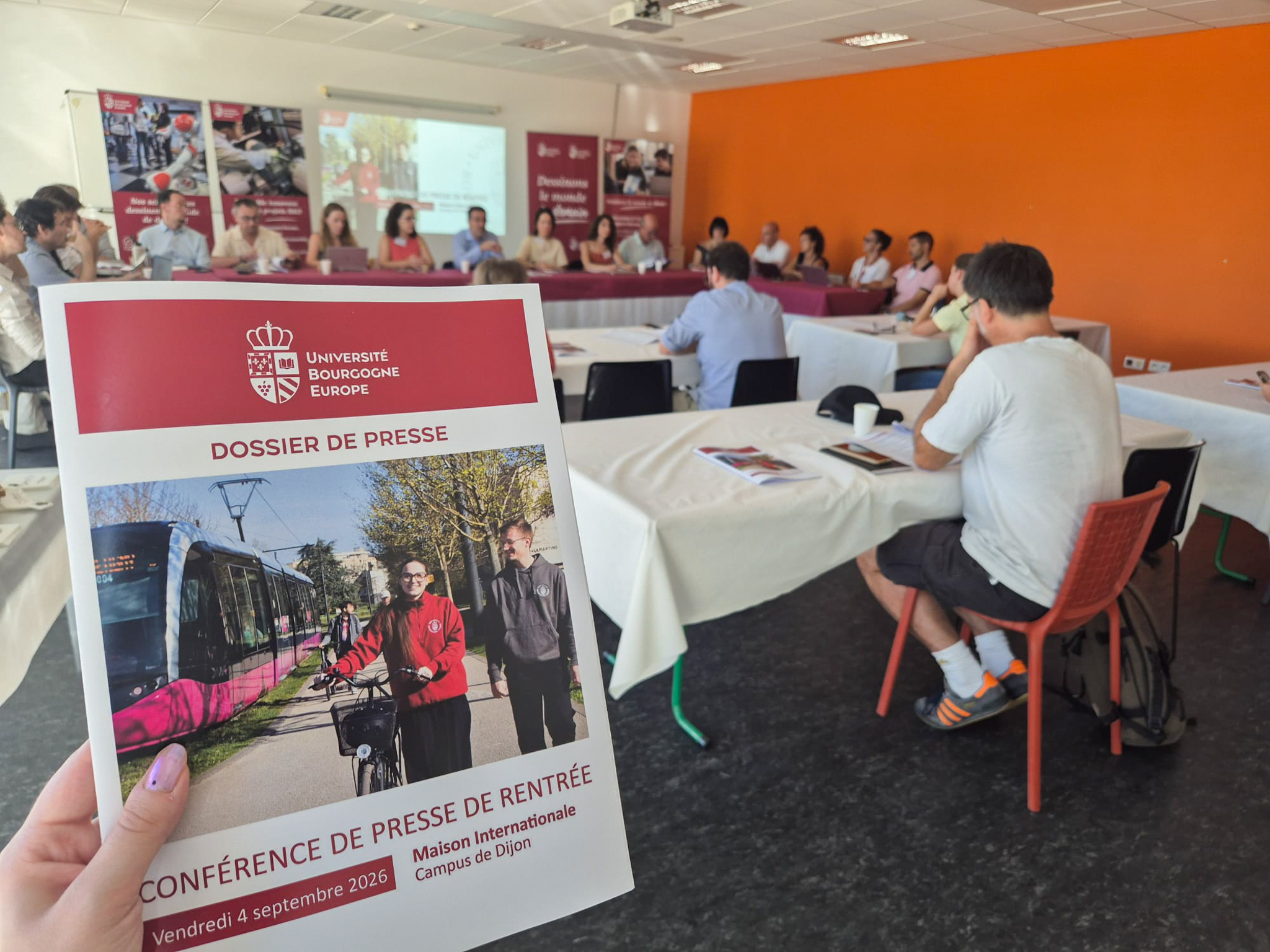
Press pack dated 4 September 2026: Press conference for the start of the 2026 academic year