


European Alliances: Université Bourgogne Europe Committed to Sustainable Support
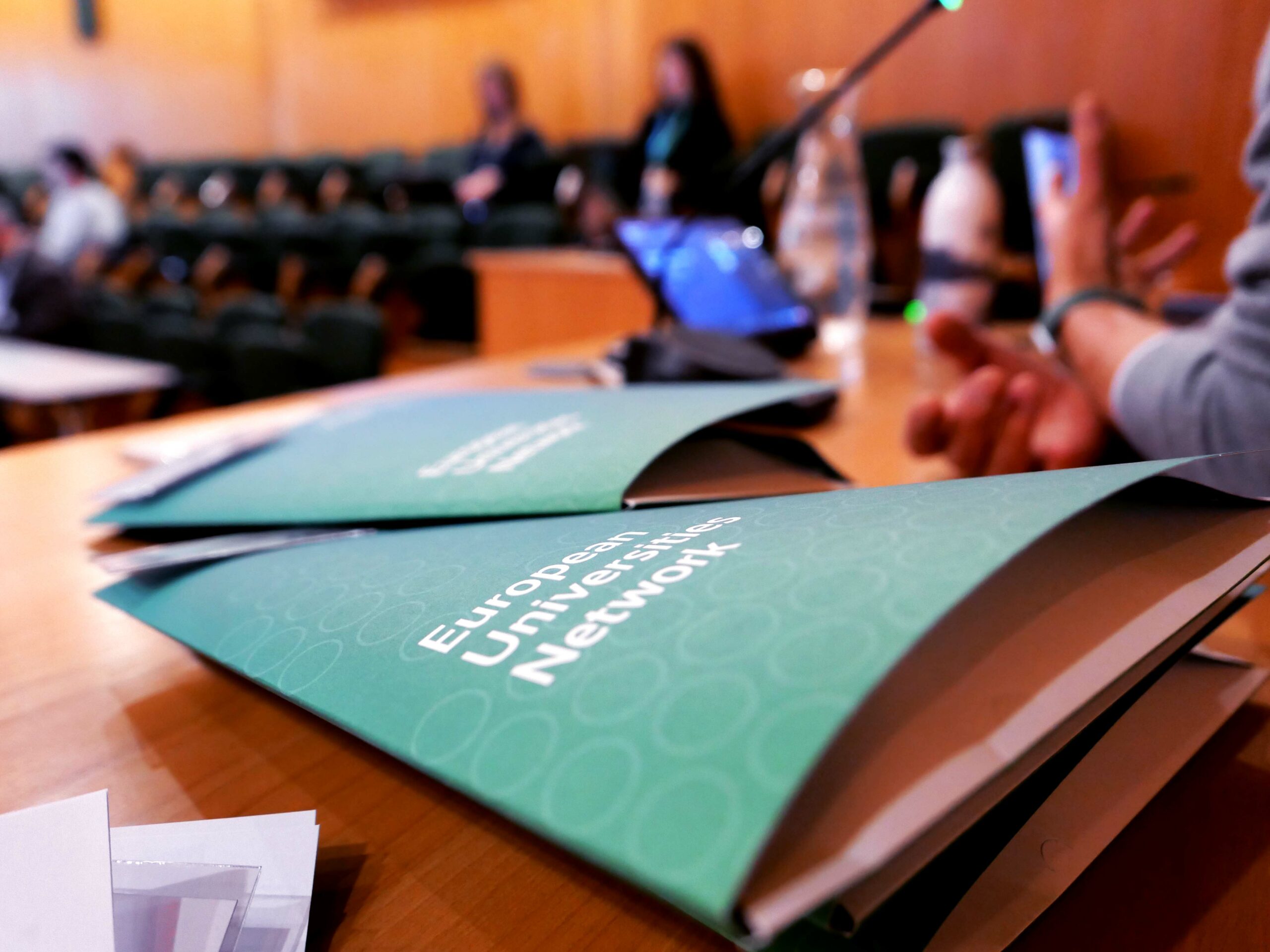
In a context where European university alliances are emerging as a structuring lever for the future of higher education and research, Université Bourgogne Europe strongly reaffirms its commitment to their development. Following the letter sent to the Minister of Higher Education, Research and Space by 56 institutional leaders, calling for sustained national support, UBE fully joins this collective mobilization. Convinced of the essential role these alliances play in transforming educational models, strengthening international cooperation, and enhancing regional attractiveness, Université Bourgogne Europe advocates for ambitious and lasting support, commensurate with European challenges and the ongoing dynamics.
An ongoing dynamic
European university alliances now represent a major structuring lever to strengthen the internationalization of education, the convergence of higher education systems, and transnational cooperation. They are part of a process of profound institutional transformation that goes far beyond a logic of temporary projects, enabling the implementation of long-term strategies for university modernization, dynamism, and attractiveness.
Since the first calls for proposals, French institutions have been strongly involved in this initiative, contributing to making France one of the best-represented European countries within these networks. To support this dynamic, the French government, through the France 2030 Investment Program (PIA), has mobilized national funding of approximately €100 million over 10 years for French universities engaged in European Universities. This contribution has been decisive in enabling universities to manage the often rapid expansion of their international activities and to co-finance their alliance missions. It has encouraged investment in institutional structuring, pedagogical innovation, and the deployment of new mobility programs, in close complementarity with European funding such as Erasmus+.
Strategic role of European alliances at the national level
The qualitative evaluation report of six French institutions involved in a European university alliance, published in December 2025, highlighted the many positive effects of this initiative, first launched in a speech by the President of the Republic in 2017. European alliances enable:
- Structured and inclusive internationalization of student and academic pathways, promoting greater employability in an increasingly competitive and globalized context.
- Interdisciplinarity and pedagogical innovation through the creation of joint programs, transnational virtual campuses, and diversified, flexible, and structured study paths.
- Pooling of educational and research resources to strengthen European scientific competitiveness.
- Organizational transformation of institutions toward more integrated and collaborative models.
- Greater visibility of French higher education institutions on the international stage, increasing attractiveness and contributing to the global influence of France and its university system.
- Development of a European identity and sense of belonging among students and staff, thereby strengthening the sustainability, resilience, and development of the European Union in the face of an unstable global geopolitical context and challenged democracies. European university alliances provide a response to fragmentation by developing alternative forms of transnational institutional cooperation, contributing to a more united and integrated Europe better equipped to address pressing global challenges.
The efforts made by French universities within these alliances also directly contribute to other national higher education priorities. They support France’s international attractiveness and the goal of improving the reception of international students; they accelerate the transformation of educational offerings and their adaptation to future skills; and they support and strengthen the digital and ecological transition of institutions.
These efforts position France at the forefront of European developments in joint degrees, common standards, and the integration of the European Higher Education Area.
Current situation: a challenge for the next funding phases
While France has demonstrated strong national commitment by providing significant financial support to higher education institutions selected in European calls for proposals between 2019 and 2024, this support is currently no longer guaranteed for future calls. The absence of visibility regarding the continuation or increase of national funding significantly undermines the ability of French universities to maintain their European commitments and to fully and sustainably continue the transformations underway. Without stable national funding, universities will be forced to slow down, postpone, or even abandon key investments. Beyond the immediate risk of reduced visible activity, this would also mean:
- Loss of expertise and newly emerging professions,
- A lag in aligning with emerging European frameworks,
- A lasting weakening of French institutions’ ability to meet their alliance commitments,
- A slowdown in the internationalization and Europeanization of academic communities,
- Reduced attractiveness of French higher education institutions,
- Loss of momentum in supporting research alongside Erasmus+ funding.
Thanks to this investment, French universities have been able to undertake major transformation expenditures: internationalization and restructuring of academic programs, expansion of joint programs, adaptation of administrative processes, interoperability and modernization of digital infrastructure, progressive integration of European standards, and the building of research and innovation communities. These investments are not intended to grow indefinitely but must be supported for several more years, as institutional transformation necessarily takes place over the long term.
Request to the Ministry for strong and lasting commitment
In this context, the presidents of higher education institutions that are members of a European university alliance strongly urge the Ministry to guarantee the continuation and expansion of national funding for European alliances, enabling French universities to meet strategic higher education and research challenges.
Such a strong and lasting commitment is not merely a financial issue: it would represent a powerful political signal from France, reaffirming its capacity to be a leading player in the European Higher Education Area.
Conclusion
European alliances represent far more than cooperative initiatives: they are a strategic pillar of the development and modernization of French higher education. They require not only an ambitious European vision but also sustained national support commensurate with present and future challenges.
The presidents call on the Ministry to quickly confirm a significant financial commitment in the new funding phase, so that French universities can continue to play a leading role in building a robustly integrated European area for education and research.
Signatories
- Christine Neau-Leduc, présidente de l’Université Paris 1 Panthéon-Sorbonne (alliance Una Europa)
- Lamri Adoui, président de l’Université de Caen Normandie (alliance AcrossEU)
- David Alis, président de l’Université de Rennes (alliance EDUC)
- Philippe Augé, président de l’Université de Montpellier (alliance CHARM-EU)
- Yvan Auguet, président de l’Université Perpignan Via Domitia (alliance Across)
- Karine Bergès, présidente de l’Université Paris-Est Créteil (alliance Aurora)
- Mathias Bernard, président de l’Université Clermont Auvergne (alliance ARTEMIS)
- Carine Bernault, présidente de Nantes Université (alliance EUniWell)
- Frédérique Berrod, présidente de l’Université de Strasbourg (alliance EPICUR)
- Éric Berton, président d’Aix Marseille Université (alliance CIVIS)
- Laurent Bordes, président de l’Université de Pau et des Pays de l’Adour (alliance UNITA)
- Régis Bordet, président de l’Université de Lille (alliance NeurotechEU)
- Mourad Abdelkrim Boukhalfa, président du Groupe INSA (alliance ECIU)
- Hélène Boulanger, présidente de l’Université de Lorraine (alliance EURECA-PRO)
- Stéphane Braconnier, président de l’Université Paris-Panthéon-Assas (alliance 4EU+)
- Philippe Briand, président de l’Université Savoie Mont Blanc (alliance UNITA)
- Anthony Briant, directeur de l’Ecole nationale des ponts et chaussées (alliance EELISA)
- Sabine Brun, directrice de Bordeaux Sciences Agro (alliance EU-GIFT)
- Nathalie Charnaux, présidente de l’Université Sorbonne Paris Nord (alliance UNINOVIS)
- Laura Chaubard, présidente de l’Ecole polytechnique (alliance EuroteQ)
- Christophe Clément, président de l’Université de Reims Champagne Ardenne (alliance INVEST)
- Christophe Collet, président de l’Université de Technologie de Troyes (alliance EUT+)
- Hugues Daussy, président de l’Université Marie et Louis Pasteur (alliance STARS EU
- Nathalie Drach-Temam, présidente de Sorbonne Université (alliance 4EU+)
- Patxi Elissalde, directeur générale de l’École supérieure des technologies industrielles avancées (alliance EU4Dual)
- Frédéric Fotiadu, directeur de l’INSA Lyon (alliance ECIU)
- Camille Galap, président de l’Université Paris-Saclay (alliance EUGLOH)
- Laurent Gatineau, président de CY Cergy Paris Université (alliance EUTOPIA)
- Vincent Gouëset, président de l’Université Rennes 2 (alliance Emerge)
- Jean-François Huchet, président de l’Inalco (alliance EUniWell)
- Vincent Jolivet, président de l’Université de Limoges (alliance EUPeace)
- Hugues Kenfack, président de l’Université Toulouse Capitole (alliance ENGAGE.EU)
- Pedro Lages Dos Santos, président de l’Université Le Havre Normandie (alliance EUNICoast)
- Arnaud Laime, président de l’Université Paris VIII. Vincennes (alliance ERUA)
- Virginie Laval, présidente de l’Université de Poitiers (alliance EC2U)
- Franck Le Derf, président de l’Université de Rouen Normandie (alliance INGENIUM)
- Delphine Letort, présidente de Le Mans Université (alliance Colours)
- Dean Lewis, président de l’Université de Bordeaux (alliance ENLIGHT)
- David Menier, président de l’Université Bretagne Sud (alliance EMERGE)
- Daniel Mouchard-Zay, président de l’Université Sorbonne Nouvelle (alliance YUFE)
- Pierre-Alain Muller, président de l’Université de Haute-Alsace (alliance EPICUR)
- Pascal Olivard, président de l’Université de Bretagne Occidentale (alliance SEA-EU)
- Catherine Passirani, vice-présidente international et égalité de l’Université d’Angers (alliance EU GREEN)
- Fernando Pedraza, vice-président en charge des relations internationales et Europe de l’Université de La Rochelle (alliance EU-CONEXUS)
- Denis Postel, président de l’Université de Picardie Jules Verne (alliance Bauhaus4EU)
- Vanessa Proux, directrice générale de SupBiotech (alliance UNIgreen)
- Vivien Quéma, administrateur général de Grenoble INP – UGA (alliance Unite!)
- Philippe Roingeard, président de l’Université de Tours (alliance NEOLAiA)
- Caroline Rolland-Diamond, présidente de l’Université Paris Nanterre (alliance EDUC)
- Claire Rossi, directrice de l’Université de technologie de Compiègne (alliance SUNRISE)
- Vincent Thomas, président de l’Université Bourgogne Europe (alliance FORTHEM)
- Ioan Todinca, vice-président délégué à l’alliance européenne Athena de l’Université d’Orléans (alliance ATHENA PLUS)
- Michael Toplis, président de la Comue de Toulouse (alliance UNIVERSEH)
- Alain Trouillet, vice-président en charge de la formation, de l’international et de l’Europe de l’Université Jean Monnet – Saint-Etienne (alliance Transform4Europe)
- Luis Vassy, directeur de Sciences Po (alliance CIVICA)
- Isabelle von Bueltzingsloewen, présidente de l’Université Lumière Lyon 2 (alliance Bauhaus4EU)