


Results of the 2025 mobility survey
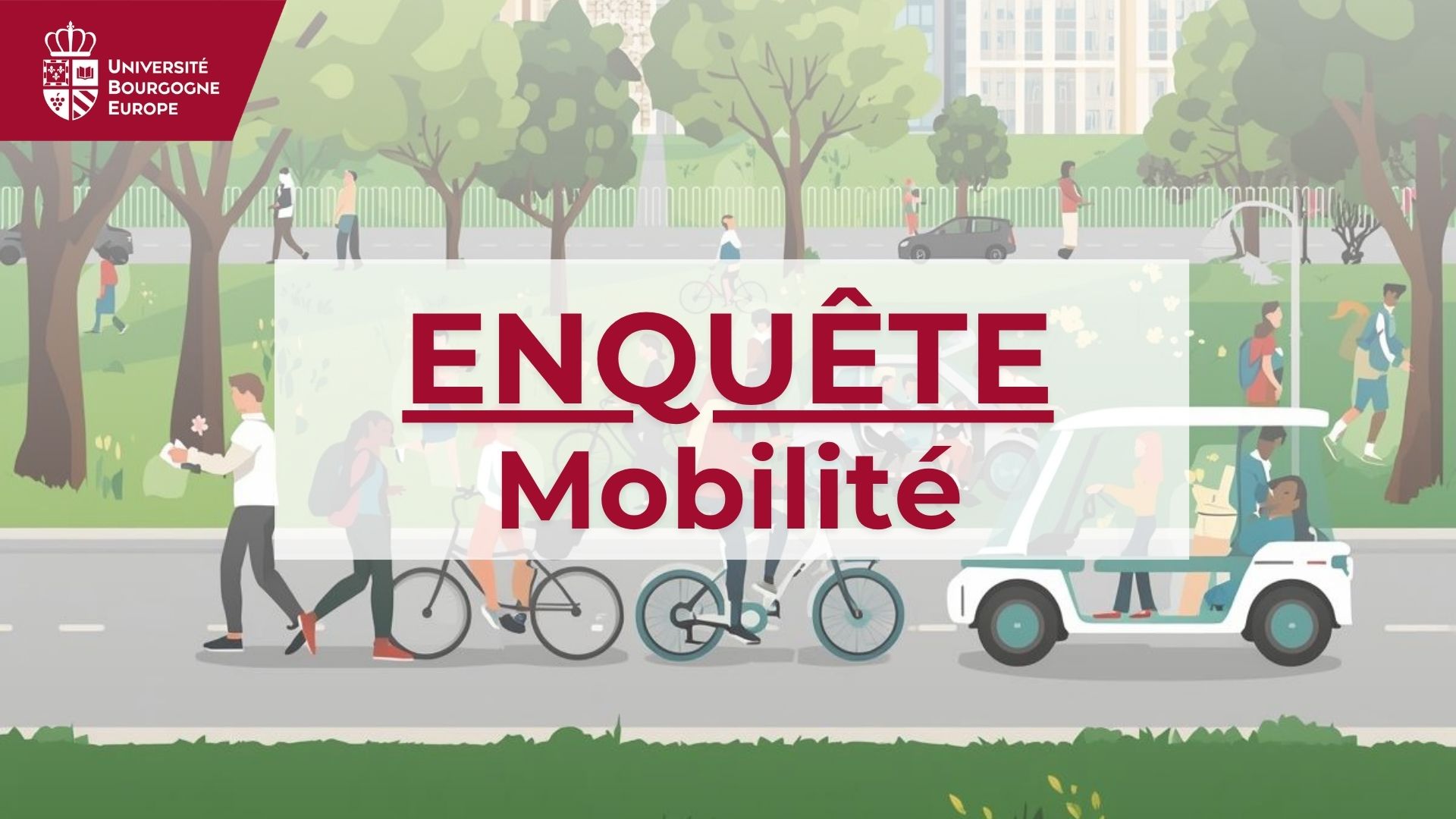
Last year, the sustainable campus unit of Université Bourgogne Europe commissioned students from the TMEC (Transport, Mobilité, Environement, Climat) master’s program to conduct a survey on the mobility of UBE users. The results obtained today make it possible to identify the main issues of mobility for the uses of the UBE.
This survey allowed students to put their skills into practice in the service of a concrete project for the institution, similar to what they will encounter in their future professional life. The objective was to collect a reliable database to understand how all members of the university join different campuses on a daily basis.
Sustainable mobility: a majority practice
The analysis of the results shows that soft and collective mobility are the most widespread practices (tramway, urban bus, because regional and TER); they represent 41% of the modes of travel for users on the Dijon campus.
Of course, territorial campuses are subject to different issues; they are located in smaller cities, which means that there is less public transport available.
Stressed infrastructure
The survey collects the difficulties encountered by users, namely:
- For users of motor vehicles: Frequent traffic problems, congestion and overcrowding in campus parking lots.
- For public transport users: Train capacity is full and service frequency deemed insufficient.
Evolution and prospects
The university has already put in place equipment to promote more environmentally friendly modes of transport, including charging stations for electric vehicles and bicycle racks.
Added to this is the T3 tramway line project planned by Keolis and the Dijon metropolitan area, which should improve the regulation of flows to and from the Dijon campus.